Saturday, December 4, 2010

Faceless Killers by Henning Mankell

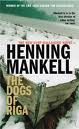
This is the first in the Kurt Wallander crime series by Swedish author Henning Mankell.  I recently read and reviewed the second novel in the series: The Dogs of Riga.  Faceless Killers introduces us to detective Wallander who is in his early forties, separated from his wife, gaining weight, and drinking too much 

Faceless killers opens with an elderly man waking up to discover the truly grisly attack on his elderly neighbours, in a quiet rural community in Skane, Sweden.  Wallander and his team are up against it in trying to solve the murder of  this couple.  There are very few clues, apart from the apparent double life of the murdered man.  The dying words of the murdered woman suggest that "foreigners" were involved in the killings.  Once news of this is released through the press, debate around refugee policy in the country is sparked and further atrocities are committed.

The story, including the refugee element, is sensitively handled by Mankell.  Mankell's novels are written in Swedish and translated.  As I have asserted in other posts I do think that some modern crime fiction has a measured literary feel to it.  Mankell writes beautifully:

Wallander looked at the man sitting in front of him.  There was something hard and dogged about him.  Like a man who had been brought up eating gravel.   p 72

I enjoyed the plot of the second novel in this series The Dogs of Riga slightly more than Faceless Killers.  Overall Dogs of Riga was more complex and satisfying in terms of the story.  But that doesn't really matter because I suspect that much of the enjoyment from these novels comes from the character development and exploits of Kurt Wallander, himself.  His life struggles and foibles appear to share centre stage with any crime that is being solved. 

In Faceless Killers we learn of Wallander's challenges with his failed marriage, his father who has dementia, and his wayward daughter.  As with all good characters, there are certain contradictions within Wallander.  His crime solving style is pedantic and dogged but in his personal life Wallander can be impulsive, embarrassing and appears to fall in love at the drop of a hat.  This all makes for a nuanced and sympathetic character that I look forward to following through the remaining novels in the series.

The Hottest State by Ethan Hawke

The Hottest State  by actor, director, screenwriter Ethan Hawke was published in 1996.  I came across it on a library shelf when I was looking for something else.  Always being a fan of Ethan Hawke's film roles I thought it would be interesting to give one of his novels a go.

The narrative is told in the first person from the point of view of William a twenty year old Texan actor living in New York.  The story takes place in the months around his twenty first birthday.  It is mostly concerned with his tumultuous affair with Sarah, a young singer and childcare worker.

Hawke writes really well.  The book is fast paced and engrossing.  The character of William is fairly unsympathetic, but I found myself hooked into the story non the less. For the most part William comes across as a self absorbed, vain and idle young man.  He  also appears painfully insecure and vulnerable at times.  There is something relatable and uncomfortably real about the relationship between William and Sarah as it unfolds. He captures very well the pain and insecurity of young relationships.

Sarah is a handful for William, she does not conform to the usual glossy types he is used to being around.  The relationship brings William face to face with himself.  There is some wonderful character development as William is unhappily forced to learn relationships aren't just about his needs and projections.

I could see how some might find The Hottest State a bit self indulgent on Hawke's part, but to me that was part of the point.  It has a similar "Generation X" slightly neurotic feel to it like the film Reality Bites.   Above all I was impressed and surprised by the quality of Hawke's writing.  He can really write.  I enjoyed it and look forward to reading Hawke's other novel "Ash Wednesday" at some stage in the future.

Friday, November 26, 2010

Book Blogger Hop

Book Blogger Hop

Tis Friday and time for the Book Blogger Hop, hosted by Jennifer at Crazy For Books.  This week's question is:

What is your favourite book cover?

I can't say that I have a favourite.  This answer is appalling I know because so much time and expense goes into creating book covers these days.  One that stands out is a book I read recently by Agatha Christie: A Caribbean Mystery.  It stands out because the cover was a bit macabre.  The most beautiful cover I have seen recently is from Monsoon by Di Morrissey.

I will be interested to find out what other people think of as their favourite.

Hope you have a good weekend.

Tuesday, November 23, 2010

The Flight of the Falcon by Daphne du Maurier

The Flight of the Falcon, by Daphne du Maurier was first published in 1964.  Before launching into this review I feel that I should provide some context in terms of my relationship with Du Maurier's fiction.  When I was 13 I read Rebecca, by Du Maurier and it began my so far lifelong love of good fiction.  Before age 20 I had read all of the Du Maurier novels and short stories I could get my hands on.  I pretty much love it all. Generally speaking Du Maurier's work is tense and suspenseful and often keeps the reader feeling slightly off kilter.

The Flight of the Falcon like several of her other novels, is told in the first person from a male perspective.  The narrator of the story is Armino Fabbio, an Italian tour guide.  The tale starts out with Armino conducting a tour bus of American and English tourists through Rome.  Here one evening he notices an old vagrant lady slumped in the doorway of a church.  He approaches the old lady to give her some money and is struck my her strong resemblence to his childhood nanny.  The next day he learns that the old lady has been murdered and he decides to return to his childhood home Ruffano (a ficticious Italian town) as he has a vague sense that he wants to determine if this woman had been Marta, his nanny, and what might have lead to her being in such a situation in Rome.

Armino, who is now 32, returns to his hometown after an absence of 25 years.  As the story unfolds we learn of the history of his family, who were tragically torn apart during the second world war.  Armino, who always believed his elder brother, a fighter pilot during the war, had been shot down and killed, learns on his return that his brother is very much alive and changed.  The Flight of the Falcon is really the story of the brothers' relationship.

The novel is perhaps not as instantly alluring as some of the other Du Maurier novels.  It took me a while to become immersed in it.  But it had me well and truly hooked by half way through. There is a wonderful sense of place in the novel, and the Italian town and landscape come alive in Du Maurier's narrative.  Ruffano is a university town in the 1960s complete with students, vespas, hilly streets and piazzas.  There is a strong tension in the novel, and to avoid spoilers I will not reveal too much about that, except to say that there is a rising sense of doom in the story.  Followers of Du Maurier will know that her novels rarely end happily and this one is no exception.  Having said that the ending is satisfying and very moving.

It is many, many years since I have read a novel by Daphne Du Maurier, having read so many when I was a teenager.  Because of this I approached the Flight of the Falcon with some trepidation because I wondered if this sort of novel would still captivate and enchant me.  And while The Flight of Falcon is by no means my favourite Du Maurier novel, it has many of the wonderful and unusual elements I associate with her style and I thoroughly enjoyed it.

Tuesday, November 16, 2010

The Dogs of Riga by Henning Mankell

I really enjoy Henning Mankell novels and The Dogs of Riga was no exception.  I would argue that no one does cold desolate landscapes better than Mankell.  The Dogs of Riga is the second in the Kurt Wallander crime series.  Swedish detective Kurt Wallander is sent on a crime solving escapade after a life raft containing two well dressed bodies washes up on the shores of his hometown of Ystad Sweden.  The action moves from Sweden to the political and social upheaval of Riga in Latvia during the early 1990s.

I like crime novels that inform while entertaining.  The Dogs of Riga provides some interesting insights and perspective into the sequelae of the fall of the USSR for the Baltic states.  I also don't seem to be able to get enough of these frozen country crime novels.  I suspect that this is partly because being Australian, frozen landscapes seem wonderfully mysterious and exotic to me.  I also think that the freezing, minimal daylight atmosphere seems to lend itself really well to torment, conspiracy and murder themes.

Henning Mankell's crime novels have a literary feel to them.  The Dogs of Riga in particular reminds me of Peter Temple's Truth and The Broken Shore.  Like the Temple books, the pace of the action is more of a slow burn and the landscape plays a leading role in the story. 

I haven't read any of the other novels in the Kurt Wallender series, but look forward to doing so.  Like alot of these leading detective types Wallander is a loner, and a bit jaded, but I really liked him.  There seemed to be a sense of humour lurking around the edges, even in the most dire situations:

"He had landed in a country where it was just as cold inside as it was out, and he regretted not having packed a pair of long johns."  p. 98

The story is compelling because Detective Wallander is taken out of his usual crime solving jurisdiction in Sweden and thrown into the completely foreign, corrupt and fear driven social landscape of Latvia after the fall of the Soviet Union.  This makes for a different type of detective novel.  Wallander has to live by his wits in a country he does not understand and where he has no professional or personal support.

If you like crime fiction in frozen landscapes where the tension mounts slowly but inexorably, The Dogs of Riga is well worth a look.  I also enjoyed  The Return of the Dancing Master earlier this year by the same author.

Friday, November 12, 2010

Book Blogger Hop

Book Blogger Hop


It is Friday and time for the Book Blogger Hop.  The Hop is hosted by Jennifer over at Crazy For Books.  To help Hoppers find out more about each other Jennifer poses a different question each week.  For this week:

"If you find a book that looks interesting but is part of a series do you always start with the first title?'

Well yes.  EXCEPT for my current read funnily enough.  The Dogs of Riga is the second in Henning Mankell's Kurt Wallander crime series.  I have read other books written by Mankell, loved them and was keen to read his Wallander series.  When I was at the library recently I couldn't find the first in the the series called Faceless Killers so decided to break the habit of a lifetime and be satisfied with commencing this series on book number two.  I am loving the book by the way and have suffered no apparent ill effects from reading number two first.

Have a very happy weekend!

Sunday, November 7, 2010

Dracula by Bram Stoker

Dracula, written by Irish author Bram Stoker, was first published in 1897.  This is the novel that I believe we have to thank or curse for the original inspiration behind the modern wave of vampire fiction.

I really enjoyed this novel.  It loses some momentum about two thirds of the way through and becomes a bit tedious and repetitive but overall it is a well spun tale of good versus evil.

Basically the story is about how a band of friends have to defeat the evil  Count Dracula to save the soul of a woman they all in different ways love. 

There is some wonderful imagery in the novel especially at the beginning when solicitor Jonathan Harker is on his way to first meet the mysterious Count Dracula at his remote castle in the creepy Carpathian mountains of Transylvania.

The story is told from multiple perspectives entirely through the writings (letters and journal entries) of the main characters.  I think this type of narrative device can be difficult to pull off but Stoker combines the different perspectives seamlessly and the narrative continues to flow.  The action moves from the Transylvania mountains to Whitby in Yorkshire to London and then back to Transylvania as Jonathan Harker ably assisted by vampire expert Van Helsing and other friends chase count Dracula to ground.  And as we all know these vampires are well and truly difficult to kill:

The nosferatu do not die like the bee when he sting once.  He is only stronger; and being stronger have only more power to work evil.  p. 223 (Mina Harker's journal)

I can imagine this novel would have been seen as quite shocking and ground breaking at the time.  Now it seems quite restrained.  It does seem to take an interminable number of pages (at least half the book) before the characters are prepared to openly acknowledge to each other that they might in fact be dealing with the supernatural.

Dracula has everything you would hope for in a book about the Un-Dead.  Dracula himself is mercurial and strangely arresting.  He is also ably assisted in his evil making by a team of voluptuous and beguiling female vampires.  Dracula and his vamps can take multiple forms, from wolves to bats to tiny specks of dust in the moonlight.  I now know everything I could ever want to know about vampires and how to protect myself from them.

I suspect that some devotees of the modern Vampire stories might be a little disappointed with the original.  And perhaps I am also voicing my own disappointment here when I say there is a very patronising tone to the treatment of the female characters.  Not the female vampires for they have real flair and are truly fabulous.  The fallen women always seem to have more fun don't they?   It is more the damsels in distress approach to Lucy and Mina.  Chivalry is certainly not dead in this book, and actually becomes one of the major themes of the story.  It grated on me a tad. But I suspect Stoker is trying to say something about the role of women and how female sexuality was viewed in Victorian society.  It is just a bit frustrating, but on reflection interesting on a social commentary level.  If one wants to explore the social commentary aspects of a vampire novel that is.

Dracula takes some getting through but I do recommend it because while entertaining in its own right, it also provides some interesting context and insight into readers' seemingly endless fascination with Gothic themes and the supernatural.  I will give Professor Van Helsing the last word:

Do you not think that there are things which you can not understand, and yet which are: that some people see things that others can not?......Ah it is the fault of our science that it wants to explain all; and if it explain not, then it says there is nothing to explain.  p. 182