I enjoyed this novel by Margaret Atwood. It is the third novel I have read by her. Alias Grace is historical fiction, based on the story of Grace Marks who was convicted of murder in the nineteenth century in Canada.
I have read two other novels by Atwood, The Blind Assassin and The Handmaid's Tale. Alias Grace is a different novel compared to these two. It is a detailed character study of a convicted woman; aspects of her childhood and circumstances that lead to her being implicated in two violent murders. What it does have in common with the other novels is a clear focus on female circumstances and point of view.
I liked the pace of Alias Grace, the plotting is well thought out and the tension builds steadily through the narrative, leading to the unveiling of events surrounding the murders. Atwood explores other contemporary issues in her story of Grace, including the different theories on mental health ailments at the time, and early experimentation in hypnosis. As in the other two novels I have read, Atwood's handling of the desperate plight of women who did not have family or wealth to back them up, is arresting.
I found this a very human story. The main characters are multidimensional and believable. For me the most intriguing character was Dr Jordan, whose perspective on events informs the reader for part of narrative. His weakness was perplexing and really annoyed me after I finally put the book down. I think that is the strength of this novel, all of the characters are beautifully drawn, and, as in life, seemingly dependable people can be frustratingly weak and self deluded at times. There is a lot of complexity to the characters in this book.
There is variety in the structure too, with part of the novel told in the first person from Grace's perspective, part of the novel told in the third person, largely from the point of view of Dr Jordan, and sections of the story told through extracts from media accounts, legal accounts, and personal and professional letters. These were all artfully handled in my view and added real interest.
Ultimately this is Grace's story, and I think it will definitely stay with me for some time. Her voice was very clear, even though much of her life was about waiting and existing with very few options for friendship or communication. Atwood also leaves just enough unexplained, so that I was left wondering, and found myself thinking back on the story for some time. There is a clever playfulness to Margaret Atwood's work that I really like.
Friday, November 7, 2014
Saturday, October 25, 2014
Review of Tim Winton's Eyrie
Tim Winton is one of my favourite authors and so it is always with a certain amount of anticipation that I read his latest offerings. Eyrie did not disappoint me. I think there are two types of Tim Winton novels. The first type, like Cloudstreet, has quite a detailed and dramatic plot, Cloudstreet being a multigenerational family drama. The second type has a sketchier plot but is heavy on the characters internal drama, with incredible prose that grips the reader and thrusts them into the main protagonist's mind and world. Eyrie is like this and I loved it.
The novel is about Tom Keely at a particular juncture in his life. He is divorced, jobless and becoming increasingly isolated from life busily going on around him. Eyrie provides a gorgeous metaphor for his situation, he is physically in an eyrie, in a rundown apartment at the top of a city high rise building, and he is emotionally cut off too. We meet him perhaps at his lowest point, where he is savagely hungover from a night of abusing prescription medication and alcohol.
Winton explores a number of other contemporary Australian issues through his character Tom. Tom used to be a successful environmental campaigner and advisor. He is now completely disillusioned with what is happening in his state of Western Australia, which for all intents and purposes is controlled by the mining industry. Winton does a brilliant job of exploring the ugliness of what this so called prosperity has done to some of Australia's cities which in a short number of years have received huge sums from the mining boon. I live on the other side of the country in the state of Queensland where similar issues have confronted some of the cities and towns here in the wake of mining success.
Most of Winton's novels are set in sun soaked Western Australia, Eyrie takes place in the city of Fremantle. Winton describes in searing detail what mining has done to this city in particular and Western Australia generally. Through the eye's of Tom, and the people he encounters, the reader also experiences what mining prosperity has done to the social conscience of the people; Winton is scathing and does not hold back in showing the underclass of broken people who barely exist away from the hipster haunts and shiny developments.
A woman, who used to be a neighbour of Tom's when he was a child, moves into his building with her grandson, and Tom is forced slowly but surely over the course of the novel, to move outside of his own suffering and connect again with the world. As much as the story is about the bigger issues of the cost of prosperity from the mining industry, it is also Tom's personal story. I was very moved by Tom and his struggle to forgive and connect. The supporting characters are multidimensional and vivid also. Tom's mother is especially good.
I loved this book. I like Winton's writing generally. His prose is visceral and in the readers face, or more correctly he puts the reader right in the body and mind of his characters, you can't escape. It's a completely nerve jangling experience. The pace of the novel rockets along. It is the best sort of page turner. I find his style unique. Winton is economical with his words and he knows how to write emotions up close and unleashed.
I think some readers have found this novel too dark, and that's okay, parts of the story are dark. I think it is also probably a testament to Winton's success and following that he seems to be at a point in his career where he can perhaps write the stories he feels really passionate about. Good on him I say. There is nothing wrong with a novel with a social and environmental conscience, especially when it is as engaging as this one.
The novel is about Tom Keely at a particular juncture in his life. He is divorced, jobless and becoming increasingly isolated from life busily going on around him. Eyrie provides a gorgeous metaphor for his situation, he is physically in an eyrie, in a rundown apartment at the top of a city high rise building, and he is emotionally cut off too. We meet him perhaps at his lowest point, where he is savagely hungover from a night of abusing prescription medication and alcohol.
Winton explores a number of other contemporary Australian issues through his character Tom. Tom used to be a successful environmental campaigner and advisor. He is now completely disillusioned with what is happening in his state of Western Australia, which for all intents and purposes is controlled by the mining industry. Winton does a brilliant job of exploring the ugliness of what this so called prosperity has done to some of Australia's cities which in a short number of years have received huge sums from the mining boon. I live on the other side of the country in the state of Queensland where similar issues have confronted some of the cities and towns here in the wake of mining success.
Most of Winton's novels are set in sun soaked Western Australia, Eyrie takes place in the city of Fremantle. Winton describes in searing detail what mining has done to this city in particular and Western Australia generally. Through the eye's of Tom, and the people he encounters, the reader also experiences what mining prosperity has done to the social conscience of the people; Winton is scathing and does not hold back in showing the underclass of broken people who barely exist away from the hipster haunts and shiny developments.
A woman, who used to be a neighbour of Tom's when he was a child, moves into his building with her grandson, and Tom is forced slowly but surely over the course of the novel, to move outside of his own suffering and connect again with the world. As much as the story is about the bigger issues of the cost of prosperity from the mining industry, it is also Tom's personal story. I was very moved by Tom and his struggle to forgive and connect. The supporting characters are multidimensional and vivid also. Tom's mother is especially good.
I loved this book. I like Winton's writing generally. His prose is visceral and in the readers face, or more correctly he puts the reader right in the body and mind of his characters, you can't escape. It's a completely nerve jangling experience. The pace of the novel rockets along. It is the best sort of page turner. I find his style unique. Winton is economical with his words and he knows how to write emotions up close and unleashed.
I think some readers have found this novel too dark, and that's okay, parts of the story are dark. I think it is also probably a testament to Winton's success and following that he seems to be at a point in his career where he can perhaps write the stories he feels really passionate about. Good on him I say. There is nothing wrong with a novel with a social and environmental conscience, especially when it is as engaging as this one.
Friday, October 24, 2014
Review of The Philosopher's Pupil by Iris Murdoch
I picked up my copy of this book from a secondhand bookshop at Byron Bay while on holiday a couple of months ago. I think I chose this book for two reasons: firstly, it was hot at the beach, and the cool water on the this book cover looked inviting. Secondly, I had long heard of Iris Murdoch and the curious me, or perhaps more honestly, the part of me that fancies myself a bit of an intellectual type, wanted to read something by her. The point being, that this may not have been the best choice for a time of relaxation; Ms Murdoch demanded that I engaged the old brain and do some real work. It took me a while to finish.
Iris Murdoch was an Anglo Irish author of the twentieth century. She was also a philosopher, and this novel contains some interesting themes, including: that even with the aid of philosophy, and self knowledge, human interactions can get very messy indeed.
The Philosopher's Pupil begins with a dramatic argument between a husband and wife, driving home after a dinner party. This is not in itself original ground, but the whole novel, and it is a long one, flows from the consequences of this argument. We are introduced to the almost completely unlikeable character of George McCaffrey, the husband, and his waiting-for-martyrdom wife, Stella. The morning after the dramatic events of the night before, the reader awakes with George in bafflement, and is introduced to the remainder of his uniformly insufferable family who are prominent members of Ennistone, the fictitious English spa town where the story plays out.
This novel began to make sense and work for me when I realised it is very darkly comic. These people are so horrible they are fascinating. They are all self serving, superficial and petty. I also liked the way Murdoch used the actual bathhouse in Ennistone, as this wonderful device to bring all the characters together. Everyone in this quaint town, including the visitors, congregate at the spa to swim and bathe, in all weathers.
It is an enormous cast of characters, including a philosopher returned to Ennistone for a visit. Murdoch creates mayhem, mixing past hurts, closely kept secrets and self delusion with manipulation and misunderstanding on a grand scale. With persistence I ended up enjoying parts of this novel. The ending was a bit weak for me. With an Epilogue titled "What Happened Afterwards" Murdoch, no doubt with her tongue firmly planted in her cheek, proceeds to update the reader with life outcomes for her main players. This annoyed me. But by then I felt I had really achieved something by just finishing this novel.
The next time I am at the beach I will forget my own delusions of grandeur and choose something a little less demanding, with heroes and exotic locations, or even a glossy magazine...
Have you read any Iris Murdoch novels? Maybe The Sea The Sea which won the Booker? Some time will pass before I pick up another of her novels I think, but she is mighty and unique, and I would like to think I could go there again.
Iris Murdoch was an Anglo Irish author of the twentieth century. She was also a philosopher, and this novel contains some interesting themes, including: that even with the aid of philosophy, and self knowledge, human interactions can get very messy indeed.
The Philosopher's Pupil begins with a dramatic argument between a husband and wife, driving home after a dinner party. This is not in itself original ground, but the whole novel, and it is a long one, flows from the consequences of this argument. We are introduced to the almost completely unlikeable character of George McCaffrey, the husband, and his waiting-for-martyrdom wife, Stella. The morning after the dramatic events of the night before, the reader awakes with George in bafflement, and is introduced to the remainder of his uniformly insufferable family who are prominent members of Ennistone, the fictitious English spa town where the story plays out.
This novel began to make sense and work for me when I realised it is very darkly comic. These people are so horrible they are fascinating. They are all self serving, superficial and petty. I also liked the way Murdoch used the actual bathhouse in Ennistone, as this wonderful device to bring all the characters together. Everyone in this quaint town, including the visitors, congregate at the spa to swim and bathe, in all weathers.
It is an enormous cast of characters, including a philosopher returned to Ennistone for a visit. Murdoch creates mayhem, mixing past hurts, closely kept secrets and self delusion with manipulation and misunderstanding on a grand scale. With persistence I ended up enjoying parts of this novel. The ending was a bit weak for me. With an Epilogue titled "What Happened Afterwards" Murdoch, no doubt with her tongue firmly planted in her cheek, proceeds to update the reader with life outcomes for her main players. This annoyed me. But by then I felt I had really achieved something by just finishing this novel.
The next time I am at the beach I will forget my own delusions of grandeur and choose something a little less demanding, with heroes and exotic locations, or even a glossy magazine...
Have you read any Iris Murdoch novels? Maybe The Sea The Sea which won the Booker? Some time will pass before I pick up another of her novels I think, but she is mighty and unique, and I would like to think I could go there again.
Tuesday, October 21, 2014
Teaser Tuesday
Teaser Tuesday is hosted by MizB of Should Be Reading. It is a fun way of sharing your current read and involves the following:
My current read is Alias Grace by Margaret Atwood:
"I look at him, then look away. An apple, I say. He must think I am simple; or else it is a trick of some sort; or else he is mad and that is why they locked the door - they've locked me into this room with a madman." p.40
Alias Grace is a historical fiction novel about convicted "murderess" Grace Marks. I'm enjoying it so far. I have read and reviewed two other books by Margaret Atwood: The Blind Assassin and The Handmaid's Tale. I would recommend The Blind Assassin to everyone without hesitation, it's simply wonderful.
Happy reading!
- Grab your current read
- Open to a random page
- Share two (2) “teaser” sentences from somewhere on that page
- BE CAREFUL NOT TO INCLUDE SPOILERS! (make sure that what you share doesn’t give too much away! You don’t want to ruin the book for others!)
- Share the title & author, too, so that other TT participants can add the book to their TBR Lists if they like your teasers!
My current read is Alias Grace by Margaret Atwood:
"I look at him, then look away. An apple, I say. He must think I am simple; or else it is a trick of some sort; or else he is mad and that is why they locked the door - they've locked me into this room with a madman." p.40
Alias Grace is a historical fiction novel about convicted "murderess" Grace Marks. I'm enjoying it so far. I have read and reviewed two other books by Margaret Atwood: The Blind Assassin and The Handmaid's Tale. I would recommend The Blind Assassin to everyone without hesitation, it's simply wonderful.
Happy reading!
Saturday, October 18, 2014
Audio Book Review: Just One Evil Act by Elizabeth George
I have read or listened to all of the Inspector Lynley books, and I am delighted that I found the latest, Just One Evil Act, one of the best. It is still incredibly lengthy, which is why I prefer to listen to the unabridged Audible version, but the story is tense throughout. More than half of the novel takes place in Italy which also added to the interest for me.
As with all audio books, the narration is critical. The divine Davinia Porter narrates this novel and her performance is just wonderful. In my experience, if an audio book is narrated by either Davinia Porter or Juliet Stevenson, you simply can't go wrong.
Elizabeth George achieves a better balance in this novel, in my view, between the various ongoing characters' stories. Barbara Havers throws herself into endless amounts of hot water trying to rescue her neighbour's daughter from being kidnapped. The circumstances of the abduction are particularly complicated, as is the apparent guilt and innocence of all involved.
There is also some lovely story for Lynley as he attempts to work through the final stages of grief from his wife's death, and find love again. Of course he also spends much of his time trying to save Barbara from herself and their superiors at Scotland Yard.
I don't seem to be able to help myself with these Elizabeth George novels, even though I have found some of the more recent installments tedious and difficult to finish. There must be a lot to be said for feeling familiar with the characters, because these characters have kept drawing me back. I like where Lynley is going in his life now, he doesn't seem to be taking himself quite so seriously, nor is he quite so pompous. Barbara may be chastened by the fallout from the events of this novel, but I hope she too will be back for more.
There is no crime series quite like this one, and I feel that George has done well to not only keep the momentum going with these characters, but also to improve her story telling craft. I eagerly await where she takes the series next.
As with all audio books, the narration is critical. The divine Davinia Porter narrates this novel and her performance is just wonderful. In my experience, if an audio book is narrated by either Davinia Porter or Juliet Stevenson, you simply can't go wrong.
Elizabeth George achieves a better balance in this novel, in my view, between the various ongoing characters' stories. Barbara Havers throws herself into endless amounts of hot water trying to rescue her neighbour's daughter from being kidnapped. The circumstances of the abduction are particularly complicated, as is the apparent guilt and innocence of all involved.
There is also some lovely story for Lynley as he attempts to work through the final stages of grief from his wife's death, and find love again. Of course he also spends much of his time trying to save Barbara from herself and their superiors at Scotland Yard.
I don't seem to be able to help myself with these Elizabeth George novels, even though I have found some of the more recent installments tedious and difficult to finish. There must be a lot to be said for feeling familiar with the characters, because these characters have kept drawing me back. I like where Lynley is going in his life now, he doesn't seem to be taking himself quite so seriously, nor is he quite so pompous. Barbara may be chastened by the fallout from the events of this novel, but I hope she too will be back for more.
There is no crime series quite like this one, and I feel that George has done well to not only keep the momentum going with these characters, but also to improve her story telling craft. I eagerly await where she takes the series next.
Monday, October 6, 2014
Review of The Small Bachelor by P.G. Wodehouse
In the past, I have attempted reading Wodehouse novels and just been a bit bored by the antics of Jeeves and co. I picked up The Small Bachelor recently because I felt like something light, thinking I would give Wodehouse another go. I am so glad I did. This novel is pure delight. I think maybe my problem with Wodehouse is limited to the Jeeves novels; there are literally dozens of others.
The Small Bachelor is set in New York during prohibition and centers around a rooftop apartment in the cities bohemian quarter and its occupants' forays in love. With names like George Finch, a quiet little man with a private income attempting life as a painter, and the resplendent J. Hamilton Beamish, expert on all things and publisher of instructive pamphlets, I knew from the first pages that this was going to be brilliant. And it really is!
Diminutive George is speechless with admiration for young Molly Waddington, who after more or less stalking her for a time, finds himself spontaneously invited to dinner by Molly's father, after he finds George skulking outside their house one evening. Molly's stepmother, the second Mrs Waddington is furious with this intrusion to her grand dinner with New York's industrialist elite, but Mr Waddington is delighted by the newcomer, and quite a stand-off ensues.
Later, George turns to his most esteemed friend and neighbour, Hamilton Beamish for advice in this courting game. Hamilton Beamish and the Waddingtons are perhaps the most beautifully drawn characters you could hope to read on a page.
This book left me constantly smiling and even laughing as I read. Wodehouse is so clever with his language and the plot moves along swiftly. There are some magical farcical moments and unexpected turns. One of the joys I think with this novel is just how many characters Wodehouse managers to cram into the mayhem. I know I keep using the word, but the book is just thoroughly delightful. Hilarity on the page is very hard to do isn't it? There are so few genuinely funny novels. For me this will be the benchmark. I look forward to reading some of the other stand alone Wodehouse novels, and may even have to revisit Jeeves.
Have you a favourite Wodehouse novel?
The Small Bachelor is set in New York during prohibition and centers around a rooftop apartment in the cities bohemian quarter and its occupants' forays in love. With names like George Finch, a quiet little man with a private income attempting life as a painter, and the resplendent J. Hamilton Beamish, expert on all things and publisher of instructive pamphlets, I knew from the first pages that this was going to be brilliant. And it really is!
Diminutive George is speechless with admiration for young Molly Waddington, who after more or less stalking her for a time, finds himself spontaneously invited to dinner by Molly's father, after he finds George skulking outside their house one evening. Molly's stepmother, the second Mrs Waddington is furious with this intrusion to her grand dinner with New York's industrialist elite, but Mr Waddington is delighted by the newcomer, and quite a stand-off ensues.
Later, George turns to his most esteemed friend and neighbour, Hamilton Beamish for advice in this courting game. Hamilton Beamish and the Waddingtons are perhaps the most beautifully drawn characters you could hope to read on a page.
This book left me constantly smiling and even laughing as I read. Wodehouse is so clever with his language and the plot moves along swiftly. There are some magical farcical moments and unexpected turns. One of the joys I think with this novel is just how many characters Wodehouse managers to cram into the mayhem. I know I keep using the word, but the book is just thoroughly delightful. Hilarity on the page is very hard to do isn't it? There are so few genuinely funny novels. For me this will be the benchmark. I look forward to reading some of the other stand alone Wodehouse novels, and may even have to revisit Jeeves.
Have you a favourite Wodehouse novel?
Sunday, October 5, 2014
Review: The Husband's Secret by Liane Moriarty
I have only recently discovered Liane Moriarty novels and can see myself working my way through them all. I have listened to the superb audible version of Big Little Lies, which I will review in the future, and borrowed the hardcover version of The Husband's Secret from the library.
The Husband's Secret is the sort of novel I would love to choose for a long haul flight. It is undemanding but engaging and satisfying. Set in suburban middle class Australia, it explores domestic secrets. Incidentally so does Big Little Lies. The secret in The Husband's Seret is a doozey and Cecilia, the wife, like Pandora can't resist opening the box, in this case a letter written by her husband many years before, and finding out what the secret is.
And so the driver of the novel is that once known, knowledge can't be unknown, no matter how much we might wish it to be so. Moriarty has a real knack for constructing her plots with the interweaving lives of her characters, without taxing the readers suspension of disbelief. She also has a gift for dialogue; her characters, especially the female characters, are brought to life through their talk and interior musings.
I like this book because the voices are familiar. This book is about humdrum ordinary people trying to deal with relationships, raising children, the tedium of the everyday, and loss. Moriarty honours the failings and strength of people trying to negotiate all of the stresses and expectations of this modern world. She prises open the domestic and reveals the secrets and heart ache often lying just below the surface; secrets that largely remain hidden and unknown.
The Husband's Secret is the sort of novel I would love to choose for a long haul flight. It is undemanding but engaging and satisfying. Set in suburban middle class Australia, it explores domestic secrets. Incidentally so does Big Little Lies. The secret in The Husband's Seret is a doozey and Cecilia, the wife, like Pandora can't resist opening the box, in this case a letter written by her husband many years before, and finding out what the secret is.
And so the driver of the novel is that once known, knowledge can't be unknown, no matter how much we might wish it to be so. Moriarty has a real knack for constructing her plots with the interweaving lives of her characters, without taxing the readers suspension of disbelief. She also has a gift for dialogue; her characters, especially the female characters, are brought to life through their talk and interior musings.
I like this book because the voices are familiar. This book is about humdrum ordinary people trying to deal with relationships, raising children, the tedium of the everyday, and loss. Moriarty honours the failings and strength of people trying to negotiate all of the stresses and expectations of this modern world. She prises open the domestic and reveals the secrets and heart ache often lying just below the surface; secrets that largely remain hidden and unknown.
Monday, September 29, 2014
Review: Human Croquet by Kate Atkinson
I have recently had some time off and read a number of interesting books. This one I borrowed from the library. I have previously read Kate Atkinson's Jackson Brodie novels and short story collections. Here is my take on her second novel Human Croquet published in 1997.
I mostly really enjoyed it. By the end, the story had completely spooled out of control, stretching believability, but by then I was so caught up I didn't mind. I read this novel in a single sitting (it was that sort of day).
The story is an intergenerational time-slip family saga with an English village setting with mythical medieval history and encroaching forest. I think much of the joy of this sort of story comes from the unexpected deviations and plot turns so I won't go into the story except to say it focuses on a girl, Isobel on the eve of her sixteenth birthday as she reflects on the impact on her young life of her mother disappearing from the family when she was a toddler.
The overall tone of the novel is surreal and magical, like some of Isabel Allende's novels. It also reminded me of an Iris Murdoch novel, The Philospher's Pupil, I read a few months ago. Like Murdoch, Atkinson is incredibly smart with her characterisations: their interactions, motives, insecurities and anxieties. Like Murdoch too, the male characters in Human Croquet are overloaded with human frailty and behave pretty badly.
I do find with the Kate Atkinson novels (including the Jackson Brodie series) that they are very intense, with the plot often circling back in on itself, and I don't remember all of the detail once I have finished. But I think that is okay when the novel is so engaging and I don't mind being challenged by her. I look forward to reading her latest, Life After Life, soon.
I mostly really enjoyed it. By the end, the story had completely spooled out of control, stretching believability, but by then I was so caught up I didn't mind. I read this novel in a single sitting (it was that sort of day).
The story is an intergenerational time-slip family saga with an English village setting with mythical medieval history and encroaching forest. I think much of the joy of this sort of story comes from the unexpected deviations and plot turns so I won't go into the story except to say it focuses on a girl, Isobel on the eve of her sixteenth birthday as she reflects on the impact on her young life of her mother disappearing from the family when she was a toddler.
The overall tone of the novel is surreal and magical, like some of Isabel Allende's novels. It also reminded me of an Iris Murdoch novel, The Philospher's Pupil, I read a few months ago. Like Murdoch, Atkinson is incredibly smart with her characterisations: their interactions, motives, insecurities and anxieties. Like Murdoch too, the male characters in Human Croquet are overloaded with human frailty and behave pretty badly.
I do find with the Kate Atkinson novels (including the Jackson Brodie series) that they are very intense, with the plot often circling back in on itself, and I don't remember all of the detail once I have finished. But I think that is okay when the novel is so engaging and I don't mind being challenged by her. I look forward to reading her latest, Life After Life, soon.
Saturday, February 23, 2013
Rebus
I am visiting Edinburgh later in the year and decided to revisit some old favourite novels set in that city.
At one time I read all of the Rebus novels by Ian Rankin, however the last in the series, Exit Music, did not hold my attention when I tried to read it back in 2007. So last weekend I tried it again and found I couldn't put it down.
For those unfamiliar with the Scottish detective, he is the ultimate in the hard drinking, cigarette smoking, rule bending, loner mould. Exit Music sees Rebus facing an empty retirement, as he attempts to solve his final case.
I admire what Rankin has done with Rebus. The character is so well drawn that he is not a stereotype, I feel like I know him. He is a grizzled, grumpy hero that I really enjoy spending time with.
In and out of Edinburgh's drinking establishments for clandestine and often tense meetings, Rankin draws the reader into the dark side of a beautiful city. It always seems cold, overcast and muddy. The cityscape matches the novels emotional tone perfectly. For those who are familiar with the series, Exit Music also brings about something of denouement in the relationship between Rebus and longstanding foe, big Ger Cafferty. The powers that be are also breathing down Rebus's neck for him to retire as quickly as possible as he has become something of an embarrassment and inconvenience for them. His faithful friend and colleague Siobhan Clarke remains loyal although this loyalty is tested as she is waiting for the opportunity to finally step out from his shadow and influence, and manage a team of detectives herself.
I am now currently a quarter of the way through the next Rebus novel Standing in Another Man's Grave. After six years Rankin has brought Rebus out of retirement as we find him in a civilian role with the police, in a cold case squad. Moreover the retirement age for the police force has also been lifted and Rebus is angling to come back as a detective.
Long suffering Det Clarke, now an Inspector, is still trying to protect Rebus from himself and compromising herself in the the eyes of her superiors, in the process. Further, the relationship between Rebus and old-school crime kingpin Big Ger seems to have developed into something of a mutual respect and strange sort of friendship. The meetings between the two, usually in a pub, are fascinating, like two big old tigers eying each other off, and taking the occasional swipe.
I look forward to getting through the rest of novel this weekend.
At one time I read all of the Rebus novels by Ian Rankin, however the last in the series, Exit Music, did not hold my attention when I tried to read it back in 2007. So last weekend I tried it again and found I couldn't put it down.
For those unfamiliar with the Scottish detective, he is the ultimate in the hard drinking, cigarette smoking, rule bending, loner mould. Exit Music sees Rebus facing an empty retirement, as he attempts to solve his final case.
I admire what Rankin has done with Rebus. The character is so well drawn that he is not a stereotype, I feel like I know him. He is a grizzled, grumpy hero that I really enjoy spending time with.
In and out of Edinburgh's drinking establishments for clandestine and often tense meetings, Rankin draws the reader into the dark side of a beautiful city. It always seems cold, overcast and muddy. The cityscape matches the novels emotional tone perfectly. For those who are familiar with the series, Exit Music also brings about something of denouement in the relationship between Rebus and longstanding foe, big Ger Cafferty. The powers that be are also breathing down Rebus's neck for him to retire as quickly as possible as he has become something of an embarrassment and inconvenience for them. His faithful friend and colleague Siobhan Clarke remains loyal although this loyalty is tested as she is waiting for the opportunity to finally step out from his shadow and influence, and manage a team of detectives herself.
I am now currently a quarter of the way through the next Rebus novel Standing in Another Man's Grave. After six years Rankin has brought Rebus out of retirement as we find him in a civilian role with the police, in a cold case squad. Moreover the retirement age for the police force has also been lifted and Rebus is angling to come back as a detective.
Long suffering Det Clarke, now an Inspector, is still trying to protect Rebus from himself and compromising herself in the the eyes of her superiors, in the process. Further, the relationship between Rebus and old-school crime kingpin Big Ger seems to have developed into something of a mutual respect and strange sort of friendship. The meetings between the two, usually in a pub, are fascinating, like two big old tigers eying each other off, and taking the occasional swipe.
I look forward to getting through the rest of novel this weekend.
Wednesday, December 12, 2012
The Poisonwood Bible by Barbara Kingsolver
This year has seen me read far less than previous years. At least, I have not been completing as many novels, but reading from wider sources I guess. You know that warning that whatever you are doing at New Year, be warned you may find yourself doing it all year? Well I began this year struggling through Kafka and I do think it may have slowed me down a little.
This week did see me complete the unbelievably huge, in every sense, The Poisonwood Bible by Barbara Kingsolver. I love Kingsolver's writing, having previously read The Lacuna and listened to The Prodigal Summer. While I don't think I could accurately say that I "love" The Poisonwood Bible, I am certain, reading it, has probably changed how I view the world in a meaningful way.
The novel is set in the Belgian Congo. A US evangelical Baptist minister, Nathan Price, brings his family, his wife and four daughters, to the region in 1959. The novel tracks the family's disastrous struggles over the next 35 years. Their stories are set against the background of the region's struggle for independence from international interference.
What Worked About the Book for Me:
Kingsolver creates such lush imagery. You want a book set in deepest, darkest Africa, and actually experience what living there might be like for someone used to all of the conveniences of the West? Then this is the book to reach for. In all of her books, Kingsolver hones in on descriptions of nature. I don't know how she does it, but both this book and The Prodigal Summer, somehow intensified my appreciation of the natural world.
The format of the story is interesting. The novel is told from the perspective of Orleanna Price and her four daughters. At the beginning I didn't much like any of them, and I don't think I felt as sorry for them as I was meant too; they all struggle to survive, not only in a physical environment they are ill prepared for, but against a tyrannical and violent husband and father. But the character development over time is excellent, and over time, each character forms in her own very different way, largely in relation to struggling with her personal demons. I should of had more faith in Kingsolver, she does a similar thing with character development in The Lacuna. The reader has to hang in there, as she lays rich foundations, that mature and come together satisfyingly.
I didn't really see it coming, but by the end, I felt like the novel somehow gave more depth to my understanding of how the people of the African nations may view the West. Kingsolver holds up a mirror to the greed, sense of superiority, and hypocrisy that Africa has been subjected to over the decades from the, sometimes well meaning, Western nations. I felt gently confronted as the Price women's stories unfolded. I couldn't help but think, how would I go in these situations, and what choices would I make as a result?
Areas of Difficulty:
This is a long read at over 600 pages and it is largely a very grim tale. Of the three Kingsolver novels I have read so far, I would probably categorize this one as the least accessible. It really reads like a trek through a jungle filled with constant hardship. I think the nature of the story could put some readers off, and I must admit I became bogged down in parts.
Final Thoughts:
I am very happy however, that I persisted with the novel, my effort was rewarded. I won't forget this book, because as mentioned, I think I really did take something meaningful away from it, beyond the usual entertainment factor of a well written story.
Sunday, July 22, 2012
The Blind Assassin by Margaret Atwood
This is the second book I have read in recent times with the structure of an elderly lady telling her story before she dies. The other was on Canaan's Side by Sebastian Barry. That book was a disappointment for me, compared to my passion for the other Barry books I have read over the years. The Blind Assassin by Margaret Atwood strikes me as an exceptional book, I guess they don't hand out the Booker Prize for nothing (winner 2000).
As mentioned, The Blind Assassin is told by an elderly lady,Iris, as she is dying of a failing heart, perhaps in more than one sense. It is the story of two sisters, and Iris opens her story with the suicide of her younger sister Laura just after the end of WWII. Events leading up to Laura's suicide provide the thrust for the rest of the novel.
For me, part of my enjoyment of the story is in the complex narrative structure. When executed poorly, this passing from the present to the past in historical fiction, is often tedious and confusing. Margaret Atwood however, knows what she is doing. The novel is over 600 pages long and completely compelling from beginning to end. I am sure it could have all gone horribly wrong, as there are several narrative streams to the story, some told in the first person from Iris's point of view and the pivotal romantic stream cleverly told in the third person, from two points of view. It is marvellous and fascinating and all merges together beautifully in the end.
The only other novel I have read by Atwood is The Handmaid's Tale. I admired Atwood's writing in the Handmaid's Tale, but found the material too oppressive to really enjoy. In both books, Atwood's creative genius is obvious. She combines simple everyday detail with the most extraordinary imaginative worlds like no one else I can think of. China Mieville does this, but the enjoyment of his books is largely from extraordinary environments he creates, for Atwood, the outer worlds are secondary to the turmoil going on in her protagonist's head.
The themes covered in the book are many, and a couple of them are shared with The Handmaid's tale: power and class; and the position of women in society. It is a story about guilt and the cost of "turning a blind eye". There is nothing especially joyful about Atwood's stories, she explores our darker motives. But so do all of the best novels don't you think?We are moved by tragedy. I do believe that The Blind Assassin would appeal to more readers than the strange world of The Handmaid's Tale.
What do you think of Atwood's work? Do you have a favourite Atwood novel?
As mentioned, The Blind Assassin is told by an elderly lady,Iris, as she is dying of a failing heart, perhaps in more than one sense. It is the story of two sisters, and Iris opens her story with the suicide of her younger sister Laura just after the end of WWII. Events leading up to Laura's suicide provide the thrust for the rest of the novel.
For me, part of my enjoyment of the story is in the complex narrative structure. When executed poorly, this passing from the present to the past in historical fiction, is often tedious and confusing. Margaret Atwood however, knows what she is doing. The novel is over 600 pages long and completely compelling from beginning to end. I am sure it could have all gone horribly wrong, as there are several narrative streams to the story, some told in the first person from Iris's point of view and the pivotal romantic stream cleverly told in the third person, from two points of view. It is marvellous and fascinating and all merges together beautifully in the end.
The only other novel I have read by Atwood is The Handmaid's Tale. I admired Atwood's writing in the Handmaid's Tale, but found the material too oppressive to really enjoy. In both books, Atwood's creative genius is obvious. She combines simple everyday detail with the most extraordinary imaginative worlds like no one else I can think of. China Mieville does this, but the enjoyment of his books is largely from extraordinary environments he creates, for Atwood, the outer worlds are secondary to the turmoil going on in her protagonist's head.
The themes covered in the book are many, and a couple of them are shared with The Handmaid's tale: power and class; and the position of women in society. It is a story about guilt and the cost of "turning a blind eye". There is nothing especially joyful about Atwood's stories, she explores our darker motives. But so do all of the best novels don't you think?We are moved by tragedy. I do believe that The Blind Assassin would appeal to more readers than the strange world of The Handmaid's Tale.
What do you think of Atwood's work? Do you have a favourite Atwood novel?
Tuesday, July 10, 2012
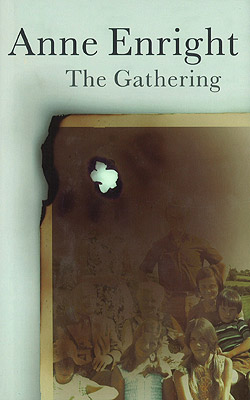
The Gathering by Anne Enright
The Gathering won the Man Booker Prize in 2007. It is a powerful book about loss and family. I hadn't read anything by Anne Enright previously but kept hearing good things about her work. Her most recent work, The Forgotten Waltz has also received good reviews.
The Gathering is mostly told in the first person, in the voice of 39 year old Veronica, as she attempts to come to terms with the death of her brother Liam. The title refers to the coming together of the remaining Hegarty family for Liam's wake. Veronica is one of nine surviving siblings.
Some of the themes covered are heavy but very well handled. Enright explores the impact of childhood sexual abuse and poverty at the individual, family and community level. She also explores intergenerational issues in a family, how an earlier generation's struggle with poverty and social restraints, can impact the current generation. I also enjoyed Enright's exploration of the role of memory in our relationships and identity.
Even though the Hegarty family is extraordinary in many respects, not least for the large family size, I found I could relate to Veronica and some of her struggles. Enright poignantly captures the very essence of family; the mixed feelings that go with dealing with family members as one ages; the piecing together of what certain events mean and the harbouring of past hurts.
As with so many of the modern Irish writers, Enright writes like a dream. There is a sophisticated literary feel to the writing but it is also earthy and real. She evokes the faded atmosphere of the family home, right down to the sounds and smells, beautifully. There is also a real physicality to her descriptions that increases the power of her prose. She recreates the memories of childhood convincingly, complete with strong impressions and ambiguity.
This is perhaps the best book I have read in a long time about the drama and difficulties of being part of a family; the threads that unite and divide, and trying to outrun the past and forge one's own identity. The novel does end hopefully, and from beginning to end is just beautifully done. I highly recommend it.
The Gathering is mostly told in the first person, in the voice of 39 year old Veronica, as she attempts to come to terms with the death of her brother Liam. The title refers to the coming together of the remaining Hegarty family for Liam's wake. Veronica is one of nine surviving siblings.
Some of the themes covered are heavy but very well handled. Enright explores the impact of childhood sexual abuse and poverty at the individual, family and community level. She also explores intergenerational issues in a family, how an earlier generation's struggle with poverty and social restraints, can impact the current generation. I also enjoyed Enright's exploration of the role of memory in our relationships and identity.
Even though the Hegarty family is extraordinary in many respects, not least for the large family size, I found I could relate to Veronica and some of her struggles. Enright poignantly captures the very essence of family; the mixed feelings that go with dealing with family members as one ages; the piecing together of what certain events mean and the harbouring of past hurts.
As with so many of the modern Irish writers, Enright writes like a dream. There is a sophisticated literary feel to the writing but it is also earthy and real. She evokes the faded atmosphere of the family home, right down to the sounds and smells, beautifully. There is also a real physicality to her descriptions that increases the power of her prose. She recreates the memories of childhood convincingly, complete with strong impressions and ambiguity.
This is perhaps the best book I have read in a long time about the drama and difficulties of being part of a family; the threads that unite and divide, and trying to outrun the past and forge one's own identity. The novel does end hopefully, and from beginning to end is just beautifully done. I highly recommend it.
Hello
Hello! I am still here and still reading.
Books I have read in the last week or so and will be reviewing in coming days:
We Need to Talk About Kevin by Lionel Shriver (And yes I know most people have read it. I didn't think it would be for me, but as it turned out, I really liked it).
The Gathering by Irish writer Anne Enright. Fabulous book. The Irish writers still tend to rule my heart and it was nice to read a modern female Irish author.
And I am currently reading a very intersting memoir by British journalist Jon Swain, River of Time, covering the five years he spent in Cambodia and Vietnam 1970-1975.
Books I have read in the last week or so and will be reviewing in coming days:
We Need to Talk About Kevin by Lionel Shriver (And yes I know most people have read it. I didn't think it would be for me, but as it turned out, I really liked it).
The Gathering by Irish writer Anne Enright. Fabulous book. The Irish writers still tend to rule my heart and it was nice to read a modern female Irish author.
And I am currently reading a very intersting memoir by British journalist Jon Swain, River of Time, covering the five years he spent in Cambodia and Vietnam 1970-1975.
Friday, February 17, 2012
How I Became a Famous Novelist by Steve Hely
It is good to be back blogging after being offline for a few weeks. I have really missed it. How I Became A Famous Novelist is one of the few novels I have read during that time. It is a bit of fun.
Pete Tarslaw, who spins this tale, is not an exemplary human being. He is lazy and cynical, though intelligent and reasonably well read. After his ex-girlfriend invites him to her wedding in twelve months time, he decides that the only way to save his pride, is to become a famous literary novelist, so he can outshine all present, and humiliate her.
Nothing, and no one, associated with the publishing world are spared from Steve Hely's barbs in this book. Including you and I! Hely not only portrays writers, especially those of so called literary fiction, as charlatans, but he mocks consumers of all things literary (books, book signings and writers' festivals) mercilessly.
The miracle of this book is that I didn't take it personally. In fact, I found myself laughing out loud at times. Which of us hasn't read some entirely overblown, though much lauded, work of literary fiction, and wondered is it me, or is this just too over the top?
Part of the fun of the novel is identifying which novels and novelists Hely is sending up, as he does not refer to them by name of course. Our would be novelist, Pete Tarslaw, makes a study of the best sellers list and concludes, without too much effort, what is "in" an what is not. He throws together a novel composed of the common themes and scenarios, without any heart, devotion to the truth, or noble intention, and comes up with his very own best selling novel. But he pays a price. Which is why I probably didn't mind that he mocked my penchant for reading WWII novels and plenty else besides.
How I Became a Famous Novelist is not the sort of novel I am going to remember much about in twelve months time. But it is refreshing and biting and ultimately (though not till the very end) affirms why so many of us, love fiction, so very much.
Pete Tarslaw, who spins this tale, is not an exemplary human being. He is lazy and cynical, though intelligent and reasonably well read. After his ex-girlfriend invites him to her wedding in twelve months time, he decides that the only way to save his pride, is to become a famous literary novelist, so he can outshine all present, and humiliate her.
Nothing, and no one, associated with the publishing world are spared from Steve Hely's barbs in this book. Including you and I! Hely not only portrays writers, especially those of so called literary fiction, as charlatans, but he mocks consumers of all things literary (books, book signings and writers' festivals) mercilessly.
The miracle of this book is that I didn't take it personally. In fact, I found myself laughing out loud at times. Which of us hasn't read some entirely overblown, though much lauded, work of literary fiction, and wondered is it me, or is this just too over the top?
Part of the fun of the novel is identifying which novels and novelists Hely is sending up, as he does not refer to them by name of course. Our would be novelist, Pete Tarslaw, makes a study of the best sellers list and concludes, without too much effort, what is "in" an what is not. He throws together a novel composed of the common themes and scenarios, without any heart, devotion to the truth, or noble intention, and comes up with his very own best selling novel. But he pays a price. Which is why I probably didn't mind that he mocked my penchant for reading WWII novels and plenty else besides.
How I Became a Famous Novelist is not the sort of novel I am going to remember much about in twelve months time. But it is refreshing and biting and ultimately (though not till the very end) affirms why so many of us, love fiction, so very much.
Saturday, January 28, 2012
A Monster Calls by Patrick Ness
A Monster Calls by Patrick Ness has an unusual and moving genesis. Ness wrote the novel based on an idea left behind by novelist Siobhan Dowd before she died prematurely from cancer.
Both the story itself, and the beautifully illustrated book are exceptional. The reader accompanies thirteen year old Conor as he tries to come to terms with his mother's terminal illness and imminent death.
I loved so many things about this illustrated novel, presumably for a young adult audience, but really I can't imagine there would be too many readers of any age that would not be swept up by this story.
Ness gets the thirteen year old voice just right. I was totally engaged with Conor; his fear, isolation and anger, are all believably rendered.
The story is perfectly paced and edited. In a minimum of words, the reader is immersed into Conor's unravelling home and school life. The scenes with his absent father were heart-breaking as were his battles with bullies at school. Ness has a light touch which is very effective.
The monster is both real and metaphorical, a tree creature that Conor has conjured up unwillingly to try and make sense of the unfathomable loss of his mother and his world as he knows it. Ness captures the loneliness of adolescence and the confusion and terror at the loss of a parent. The book is alive with genuine feeling.
Illustrator, Jim Kay, enhances the emotional impact of the novel with his dark and subtle drawings. This book is a standout from beginning to end and a work of art in itself. I highly recommended it.
Both the story itself, and the beautifully illustrated book are exceptional. The reader accompanies thirteen year old Conor as he tries to come to terms with his mother's terminal illness and imminent death.
I loved so many things about this illustrated novel, presumably for a young adult audience, but really I can't imagine there would be too many readers of any age that would not be swept up by this story.
Ness gets the thirteen year old voice just right. I was totally engaged with Conor; his fear, isolation and anger, are all believably rendered.
The story is perfectly paced and edited. In a minimum of words, the reader is immersed into Conor's unravelling home and school life. The scenes with his absent father were heart-breaking as were his battles with bullies at school. Ness has a light touch which is very effective.
The monster is both real and metaphorical, a tree creature that Conor has conjured up unwillingly to try and make sense of the unfathomable loss of his mother and his world as he knows it. Ness captures the loneliness of adolescence and the confusion and terror at the loss of a parent. The book is alive with genuine feeling.
Illustrator, Jim Kay, enhances the emotional impact of the novel with his dark and subtle drawings. This book is a standout from beginning to end and a work of art in itself. I highly recommended it.
Labels:
Young Adult
Friday, January 27, 2012
The Art of Travel by Alain de Botton
This book is nothing short of inspiring and life affirming - I loved it.
I am quickly becoming hooked on De Botton's lucid and intelligent writing. In The Art of Travel, he explores all aspects of the travelling experience, cleverly combining thoughts on travel from artists, poets, and other luminary thinkers with his own personal accounts and points of view.
His books are so beautifully conceived and executed. The Art of Travel opens with a section "On Anticipation" where he argues strongly, and using some hilarious historical examples, how so much of the enjoyment of any travel adventure, is in planning. He also digs deep into the human psyche and captures why travel is addictive for so many of us. Throughout the whole book I found myself marvelling at his singularly brilliant way of expressing human truths:
"Journeys are the midwives of thought. Few places are so conducive to internal conversations than a moving plane, ship or train." p.57
The final chapter "On Habit" invites the reader, after many happy pages of adventure through the beautiful and the sublime, accompanied by words of wisdom on travel from the likes of Flaubert, Wordsworth and Van Gogh, to reconsider our own familiar home environments through fresh eyes. And that, as exhilarating and refreshing as travelling so often is, there is much to see in our own backyards if we only adjust our mindset to one of curiosity.
This book is just as good as The Consolations of Philosophy which I read last year. I am besotted with De Botton. On more than one occasion now, his books have lured me away from my usual diet of fiction to walk with him through his extraordinary take on what it is to be human.
I am quickly becoming hooked on De Botton's lucid and intelligent writing. In The Art of Travel, he explores all aspects of the travelling experience, cleverly combining thoughts on travel from artists, poets, and other luminary thinkers with his own personal accounts and points of view.
His books are so beautifully conceived and executed. The Art of Travel opens with a section "On Anticipation" where he argues strongly, and using some hilarious historical examples, how so much of the enjoyment of any travel adventure, is in planning. He also digs deep into the human psyche and captures why travel is addictive for so many of us. Throughout the whole book I found myself marvelling at his singularly brilliant way of expressing human truths:
"Journeys are the midwives of thought. Few places are so conducive to internal conversations than a moving plane, ship or train." p.57
The final chapter "On Habit" invites the reader, after many happy pages of adventure through the beautiful and the sublime, accompanied by words of wisdom on travel from the likes of Flaubert, Wordsworth and Van Gogh, to reconsider our own familiar home environments through fresh eyes. And that, as exhilarating and refreshing as travelling so often is, there is much to see in our own backyards if we only adjust our mindset to one of curiosity.
This book is just as good as The Consolations of Philosophy which I read last year. I am besotted with De Botton. On more than one occasion now, his books have lured me away from my usual diet of fiction to walk with him through his extraordinary take on what it is to be human.
Labels:
Non fiction
Thursday, January 19, 2012
We have winners
Many thanks to those who entered the New Year Giveaway. The two lucky winners are:
Joanne P BookloverBookReview (Bereft by Chris Womersley)
Sean Adventures of a Bookonaut (The Scar by China Mieville)
Congratulations!!
Joanne P BookloverBookReview (Bereft by Chris Womersley)
Sean Adventures of a Bookonaut (The Scar by China Mieville)
Congratulations!!
Labels:
Giveaway
Saturday, January 7, 2012
More Kafka
I think it is safe to assume that my brief foray into the world of Kafka has come to an end. As much as I enjoyed reading The Metamorphosis, I should have just left it there. The two other Kafka short stories I have read today have not been nearly so enjoyable, or understandable, to me.
In the Penal Colony (1919)
This is a very barbaric story that opens with a "traveller" to a strange land being instructed on the workings of a complex torture device. Out of courtesy to the readers of this blog I won't go into any more of the very gory details. The story is very compelling; you know something awful is about to happen and like the traveller, who is there as a witness, the reader is utterly powerless to do anything about it. Part of the tension comes from wondering if the traveller will step in to alter events.
The story is immensely clever, exploring ideas of justice, being morally conflicted and not sure what to do, and some really unpleasant ideas about torture and suffering, but it is just too weird and unpleasant for me.
The Country Doctor (1919)
This is a brief short story that I really did not like. The subject is unpleasant and it is so surreal that I couldn't really grasp what Kafka is trying to say. The story opens with an old country doctor making a late night flight to the bedside of a sick boy. He can't find a horse and so it appears his maid is exchanged for the use of two very fast horses. On arriving at the sick bed, the doctor is unable to treat the boy who has a very macabre wound, and the family of the boy try to prevent the doctor from leaving, he escapes through a window into the freezing night and presumably spends the rest of his life (the symbolism is dense, I couldn't really understand what was happening) riding helplessly around naked on the horses, disillusioned and dejected.
Overall I find Kafka's writing intriguing, but too dark for me. When his work began to circulate in the first half of the twentieth century I am sure it must have created an enormous stir amongst the progressive literary types. If you want to experience the brilliance without suffering nightmares or significant confusion, The Metamorphosis is well worth reading.
In the Penal Colony (1919)
This is a very barbaric story that opens with a "traveller" to a strange land being instructed on the workings of a complex torture device. Out of courtesy to the readers of this blog I won't go into any more of the very gory details. The story is very compelling; you know something awful is about to happen and like the traveller, who is there as a witness, the reader is utterly powerless to do anything about it. Part of the tension comes from wondering if the traveller will step in to alter events.
The story is immensely clever, exploring ideas of justice, being morally conflicted and not sure what to do, and some really unpleasant ideas about torture and suffering, but it is just too weird and unpleasant for me.
The Country Doctor (1919)
This is a brief short story that I really did not like. The subject is unpleasant and it is so surreal that I couldn't really grasp what Kafka is trying to say. The story opens with an old country doctor making a late night flight to the bedside of a sick boy. He can't find a horse and so it appears his maid is exchanged for the use of two very fast horses. On arriving at the sick bed, the doctor is unable to treat the boy who has a very macabre wound, and the family of the boy try to prevent the doctor from leaving, he escapes through a window into the freezing night and presumably spends the rest of his life (the symbolism is dense, I couldn't really understand what was happening) riding helplessly around naked on the horses, disillusioned and dejected.
Overall I find Kafka's writing intriguing, but too dark for me. When his work began to circulate in the first half of the twentieth century I am sure it must have created an enormous stir amongst the progressive literary types. If you want to experience the brilliance without suffering nightmares or significant confusion, The Metamorphosis is well worth reading.
The Metamorphosis by Franz Kafka
I have always wanted to read this, I think partially because so many modern authors cite Kafka as an influence. I guess I always thought that Kafka was one of those writers that is often quoted and cited as much by reputation as anything else. And I think I might have assumed that I wouldn't find his writing accessible. I was wrong, I really enjoyed this novella, or longish short story; it's a weird and wonderful tale.
The Metamorphosis, originally written in German, is a novella in three parts that charts the changing relationship of a young man, Gregor, with his family. The story opens with him waking up one morning to find he has been transformed into a large, bug-like insect. Gregor has spent the previous five years working to support his parents and younger sister, in a job he doesn't like. His transformation forces his family to change. I think this is the underlying thrust of the story.
The story is told in a very understated, matter of fact, third person narrative, from the perspective of Gregor. The writing is deceptively simple and this certainly adds to the horror of Gregor's plight. Gregor does not seem all that alarmed by becoming an insect, certainly not at the beginning. He is more worried about what his boss will think because he has missed his train. His passivity is frustrating, but I am sure that is the point.
I loved how Kafka simply, but surely, creates this bug transformation. It is so real! Kafka thinks of everything, and absolutely convinces the reader of what it would be like to find oneself trying to survive in your bedroom, at the mercy of your family, as a giant bug. All the little details, like the mobility challenges, the eating challenges, are recreated in this rather engrossing and disturbing tale. China Mieville has similar weirdly transformed human-animal, human-machine characters in some of his novels.
In short, I found myself enjoying The Metamorphosis on a couple of levels. It is both simple and complicated. The story is plainly and dispassionately told, which increases the impact of what has happened to Gregor one hundred fold. The themes are complex, and I am sure I have not figured it all out. I certainly think it is some sort of cautionary tale, that also must relate to the era it was published in (1915), about making oneself a slave to others at the expense of one's own needs.
If you are like I was, and thought that Kafka, might be a bit much, I would encourage you to read this, it doesn't take long, and it is absorbing and entirely original. Reading The Metamorphosis makes me curious about Kafka, he must have been quite an individual, way ahead, or at the very least, outside, of his time and his surrounds. I look forward to learning more about him.
The Metamorphosis, originally written in German, is a novella in three parts that charts the changing relationship of a young man, Gregor, with his family. The story opens with him waking up one morning to find he has been transformed into a large, bug-like insect. Gregor has spent the previous five years working to support his parents and younger sister, in a job he doesn't like. His transformation forces his family to change. I think this is the underlying thrust of the story.
The story is told in a very understated, matter of fact, third person narrative, from the perspective of Gregor. The writing is deceptively simple and this certainly adds to the horror of Gregor's plight. Gregor does not seem all that alarmed by becoming an insect, certainly not at the beginning. He is more worried about what his boss will think because he has missed his train. His passivity is frustrating, but I am sure that is the point.
I loved how Kafka simply, but surely, creates this bug transformation. It is so real! Kafka thinks of everything, and absolutely convinces the reader of what it would be like to find oneself trying to survive in your bedroom, at the mercy of your family, as a giant bug. All the little details, like the mobility challenges, the eating challenges, are recreated in this rather engrossing and disturbing tale. China Mieville has similar weirdly transformed human-animal, human-machine characters in some of his novels.
In short, I found myself enjoying The Metamorphosis on a couple of levels. It is both simple and complicated. The story is plainly and dispassionately told, which increases the impact of what has happened to Gregor one hundred fold. The themes are complex, and I am sure I have not figured it all out. I certainly think it is some sort of cautionary tale, that also must relate to the era it was published in (1915), about making oneself a slave to others at the expense of one's own needs.
If you are like I was, and thought that Kafka, might be a bit much, I would encourage you to read this, it doesn't take long, and it is absorbing and entirely original. Reading The Metamorphosis makes me curious about Kafka, he must have been quite an individual, way ahead, or at the very least, outside, of his time and his surrounds. I look forward to learning more about him.
Friday, January 6, 2012
Guidance on Book Clubs Required
For the first time I can remember, I feel like I have a reasonable number of people around me, in my everyday world, including colleagues at work, who love reading as much as I do.
I began to daydream about starting a social book club. This idea was only in its infancy when I mentioned it to a couple of people. Very much to my surprise, those people mentioned it to a couple of others, and now, group shy me, is facing the beginnings of this coffee-shop-book-chat-get-together next weekend.
Note to self, introverts like me, should be very careful about mentioning random musings to more action oriented extroverts, unless they themselves are ready for action. So my plea to you is this: have you been part of a book club yourself? What are some good basic ideas for getting a very informal book club off the ground? I am not a terribly structured person (that is why reading works so well for me, it demands so little) but I do wonder that if we don't have some sort of loose structure or guidelines, the group will quickly become more about sampling the various coffee shops in my little city and less about any sort of book chat.
I would love to hear of your experiences with social books clubs. What do you find works well? And are there any pitfalls to generally avoid? Have you started one up yourself? Or wanted to?
I began to daydream about starting a social book club. This idea was only in its infancy when I mentioned it to a couple of people. Very much to my surprise, those people mentioned it to a couple of others, and now, group shy me, is facing the beginnings of this coffee-shop-book-chat-get-together next weekend.
Note to self, introverts like me, should be very careful about mentioning random musings to more action oriented extroverts, unless they themselves are ready for action. So my plea to you is this: have you been part of a book club yourself? What are some good basic ideas for getting a very informal book club off the ground? I am not a terribly structured person (that is why reading works so well for me, it demands so little) but I do wonder that if we don't have some sort of loose structure or guidelines, the group will quickly become more about sampling the various coffee shops in my little city and less about any sort of book chat.
I would love to hear of your experiences with social books clubs. What do you find works well? And are there any pitfalls to generally avoid? Have you started one up yourself? Or wanted to?
Labels:
Book Clubs
Subscribe to:
Posts (Atom)